When to Start: A Portuguese Learning Timeline for Parents
The honest, age-by-age guide to introducing Portuguese — when to start, what to expect at each stage, and why the "right time" is almost always sooner than you think.
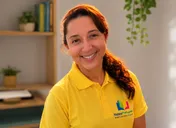
Dra. Carla Regiane Dias
PhD in Portuguese Philology · University of São Paulo
"Is my child too young to start Portuguese?" "Is my child too old — did we miss the window?" "When should we start formal lessons?" These are some of the most common questions parents bring to me, and underneath all of them is the same worry: a fear of getting the timing wrong.
There is no wrong time to start — and the best time is almost always now.
The idea of a slammed-shut "window" is mostly a myth. Children benefit from Portuguese at every age — what changes with age is not whether they can learn, but how they learn and what you should do to support them. A two-year-old, a seven-year-old, and a fifteen-year-old can all become wonderful Portuguese speakers. They just get there by different roads.
The truth about the "critical window"
It's true that very young children have a special, almost effortless capacity for acquiring language — especially for absorbing perfect, accent-free pronunciation. That part is real, and it's a genuine argument for starting early if you can.
✗ What the fear gets wrong: "The window slams shut after age three."
✓ What's actually true: The window narrows gradually and never fully closes. Older children, teenagers, and adults learn languages all the time — and in some ways better than little ones, because they can use logic, study strategically, and learn faster per hour of effort.
The real takeaway
Earlier gives an edge on pronunciation and effortless absorption. Later brings the power of strategy and speed. Both work.
The genuinely bad option is the one fear pushes parents toward — waiting for a perfect moment that doesn't exist, and letting years slip by. The window never closes, but the time does pass. Begin.
The age-by-age map
What's happening
This is the period of effortless absorption. Babies and toddlers are wired to soak up whatever language surrounds them — sounds and all. A child exposed to Portuguese now will internalize its rhythm, its sounds, and its earliest words with zero conscious effort, and with the potential for flawless, native pronunciation.
What to do
Keep it pure exposure and connection — there's no 'teaching' at this age, only living in the language. Speak Portuguese to them if you can. Sing the Brazilian children's songs. Read simple board books in Portuguese. Play Brazilian music in the background. If a parent or grandparent speaks Portuguese, let it flow constantly. The goal isn't lessons; it's making Portuguese a normal, loving part of the air they breathe.
What to expect
Don't expect output for a while — comprehension comes long before speaking, and that's normal. They're absorbing far more than they show. Mixing languages is completely normal and not a problem.
This is the ideal time if it's available to you — but if your child is already past it, don't feel you missed the boat. You didn't. You'll just take a slightly different road, and it leads to the same place.
What's happening
Children this age are still excellent natural language absorbers, but now they're also social, verbal, and playful. They use language actively, ask endless questions, and learn through games, songs, stories, and repetition. The pronunciation advantage is still strong here.
What to do
Make Portuguese play, never work. This is the age for games and songs — batata quente, amarelinha, the cantigas de roda. Read picture books together. Watch Brazilian children's shows. Keep grandparents on regular video calls. If you want to add a little structure, gentle, play-based lessons can be wonderful — but the emphasis must stay on fun and connection.
What to expect
Real speaking starts to bloom, especially if input is consistent. You may also hit the first hints of resistance — a preference for the dominant language once they're socializing in it. That's normal; keep the exposure warm and don't force.
This is a sweet spot — old enough to engage and play, young enough to still absorb sounds beautifully. If your child is here, lean in.
What's happening
Something important shifts around age seven. Children gain the ability to learn more deliberately — to grasp simple patterns, understand that words have structure, and benefit from actual teaching, not just exposure. They can now read and write, which opens the door to literacy in Portuguese. And crucially, they're usually still enthusiastic, open, and not yet swamped by teenage self-consciousness about making mistakes.
What to do
This is the age where structured lessons start to pay off enormously, and it's the lower end of the range our Young Learners program is built for. Exposure (songs, shows, books, family) remains the foundation, but now a real teacher can build genuine skills — reading, writing, grammar foundations, and confident speaking — in a way that pure home exposure rarely achieves.
What to expect
Fast, encouraging progress when learning is consistent and fun. This age group can make real leaps. The resistance phase may show up — which is exactly why having a skilled teacher who keeps it engaging and isn't the parent they'll push back against matters.
If you've been waiting for the 'right time' to start lessons, ages 7–10 is arguably it. Old enough to truly learn, young enough to love it.
What's happening
Pre-teens and young teens are powerful learners in a different way. The effortless-absorption advantage has faded somewhat, but it's more than replaced by cognitive ability: they can understand grammar explicitly, study strategically, and learn quickly. The main new variable is social and emotional — self-consciousness and the fear of looking foolish can either be harnessed or become an obstacle.
What to do
Respect them as the capable learners they are. This is the upper portion of the Young Learners range (which runs to 17), and structured teaching is highly effective — but the material must feel age-appropriate, never babyish. Connect Portuguese to things they care about: music they like, social media, travel, video games, family identity, a trip to Brazil.
What to expect
Rapid progress is very possible, but motivation becomes the key variable. A motivated teen can outpace a younger child dramatically. An unmotivated one stalls — so the work is as much about engagement as instruction.
Parents often think this age is 'too late.' It absolutely is not. Some of the most satisfying progress I've seen is with motivated pre-teens who suddenly decide they want it.
What's happening
Older teenagers learn essentially like adults — with full strategic capacity, the ability to study hard, and often, for the first time, a self-driven reason to learn. The pronunciation window has narrowed, but everything else is at full power. When an older teen genuinely wants Portuguese — for family, heritage, college plans, or identity — they can make extraordinary progress.
What to do
Treat them as the near-adults they are. Their own motivation is the engine now, so the most useful thing is connecting the language to their goals and giving them real, structured teaching that respects their intelligence. Heritage teens at this age often want to reclaim a language they feel slipping — and that desire is a powerful force.
What to expect
With motivation, fast and impressive progress. Without it, little — which is why, at this age, it has to be at least partly their choice, not only the parent's wish.
If your teenager wants to learn Portuguese, this is a wonderful time, not a missed one. Support the desire while it's there.
Young Learners · Ages 5–17 · First class free
Ready to start formal lessons?
Our Young Learners program is built for exactly this: real Portuguese for children and teens, adapted to each child's age, level, and personality.
The two questions every parent actually asks
"Will learning two languages confuse my child or hold them back?"
No. This is one of the most thoroughly debunked myths in language development. Bilingualism does not cause confusion or lasting delay. Children may mix languages early on — a normal behavior called code-switching — and may know slightly fewer words in each language at certain ages, but their total across both languages matches monolingual kids, and any gaps close. Bilingualism is associated with real cognitive benefits. Two languages is a gift, not a handicap. Don't let this myth delay your start.
"Did we miss our chance?"
Almost certainly not. I have taught heritage teenagers who'd lost most of their childhood Portuguese and rebuilt it beautifully. I've taught kids who started from scratch at ten and became fluent. The notion that it's "too late" after early childhood is simply false — what's true is that the road changes with age, not that it ends. The only real way to miss the chance is to keep waiting. So if the question in your mind is "is it too late?", the answer is: start today and find out it wasn't.
So, when should you start?
Start exposure as early as you possibly can — birth, toddlerhood, preschool. If Portuguese is in your family, surround your child with it from the beginning. Early exposure buys the pronunciation advantage that only young children get, and it costs nothing but consistency.
Start formal, structured learning around ages 7–8, when children become able to truly learn from teaching, develop literacy, and still love the process — though anytime from there through the teen years works very well.
If your child is already older — start now. A capable, motivated older child or teen can make fast, real progress. The window has not closed. The road is different, but it arrives at fluency.
Whatever the age, never let the search for the 'perfect time' become a reason to wait. The perfect time is a myth. The good time is now. Every month of exposure and practice compounds; every month of waiting is a month the language could have been growing.
The most common regret I hear from parents is never "we started too early." It's "I wish we'd started sooner."
You can spare your future self that regret by beginning — at whatever age your child is today. There's no perfect moment waiting in the future. The best time to start your child's Portuguese is the age they are today.
Where to go from here
Ages 5–17 · First class free
Young Learners program
Real Portuguese for children and teens, taught by a USP PhD who adapts to each child's age, level, and personality. Specializes in heritage kids and bilingual families.
Free resources
Start at home today
Brazilian songs, books by age, and games with built-in Portuguese — a wonderful place to begin right now, at any age.
Dra. Carla Regiane Dias
Founder of HappyPortuguese · PhD in Portuguese Philology, University of São Paulo (USP)
Carla has spent over twelve years teaching Brazilian Portuguese to children and teenagers of every age and stage. Found this reassuring? Share it with a parent wondering if it is the right time — or worried it is too late.